In this developer spotlight, we explore how the team behind Devil's Roulette drew inspiration from Gorilla Tag's creator community to fuel their own UGC strategy in one of VR's most intense party games.
Turning Psychological Gameplay Into Shareable Moments
Devil's Roulette reimagines Russian Roulette as a free VR party game for Meta Quest. Players compete solo or with up to three others, taking turns pulling the trigger of a virtual pistol loaded with random live and blank rounds. It's nerve-wracking, psychological, and—as the team at MyDearest Inc. discovered—perfect for content creation.
Released on May 8, 2025, the game blends luck and strategy in a high-tension party experience, creating moments that players naturally want to capture and share.
We sat down with David Black, who handles Promotion & Translation for MyDearest Inc., to learn how they're turning psychological gameplay into UGC gold.
Download Devil's Roulette: Free on Meta Quest Store
Inspired by Gorilla Tag's Creator Community
The decision to integrate LIV Creator Kit came from watching one of VR's biggest creator communities in action.
"We noticed that Gorilla Tag players were using LIV's selfie-style angles for self-expression, and it inspired us," Black explained. "We wanted to increase the amount of UGC, especially short-form videos, for Devil's Roulette."
This observation is telling. Rather than viewing content creation as just a recording feature, the team recognized it as a form of player expression—a way for people to showcase their personality, reactions, and psychological gameplay moments.
In a game built around reading opponents' tells and manufacturing bluffs, those selfie angles become powerful storytelling tools. They capture the tension, the moment of relief when a blank fires, or the dramatic buildup before pulling the trigger.
UGC as Core Strategy
For Devil's Roulette, user-generated content isn't peripheral to their marketing—it drives their decision-making.
"Increasing UGC directly supports community activity, reach, and playtime," Black shared. "Because of that, many of our marketing decisions revolve around how we can encourage more UGC creation."
The results speak for themselves: players create a few hundred videos every month, organically showcasing the game's intense psychological gameplay and surreal atmosphere to new audiences.
This creates a virtuous cycle. More content means more visibility. More visibility means more players. More players means more content. And in a multiplayer party game where social interaction is central, that community activity directly translates to a healthier, more engaged player base.
Ready to make UGC central to your growth strategy? Visit dev.liv.tv to see how LCK can transform your players into your most effective marketing channel.
Familiar Tools, Immediate Adoption
One of the most interesting insights from the Devil's Roulette team centers on player familiarity with content creation tools.
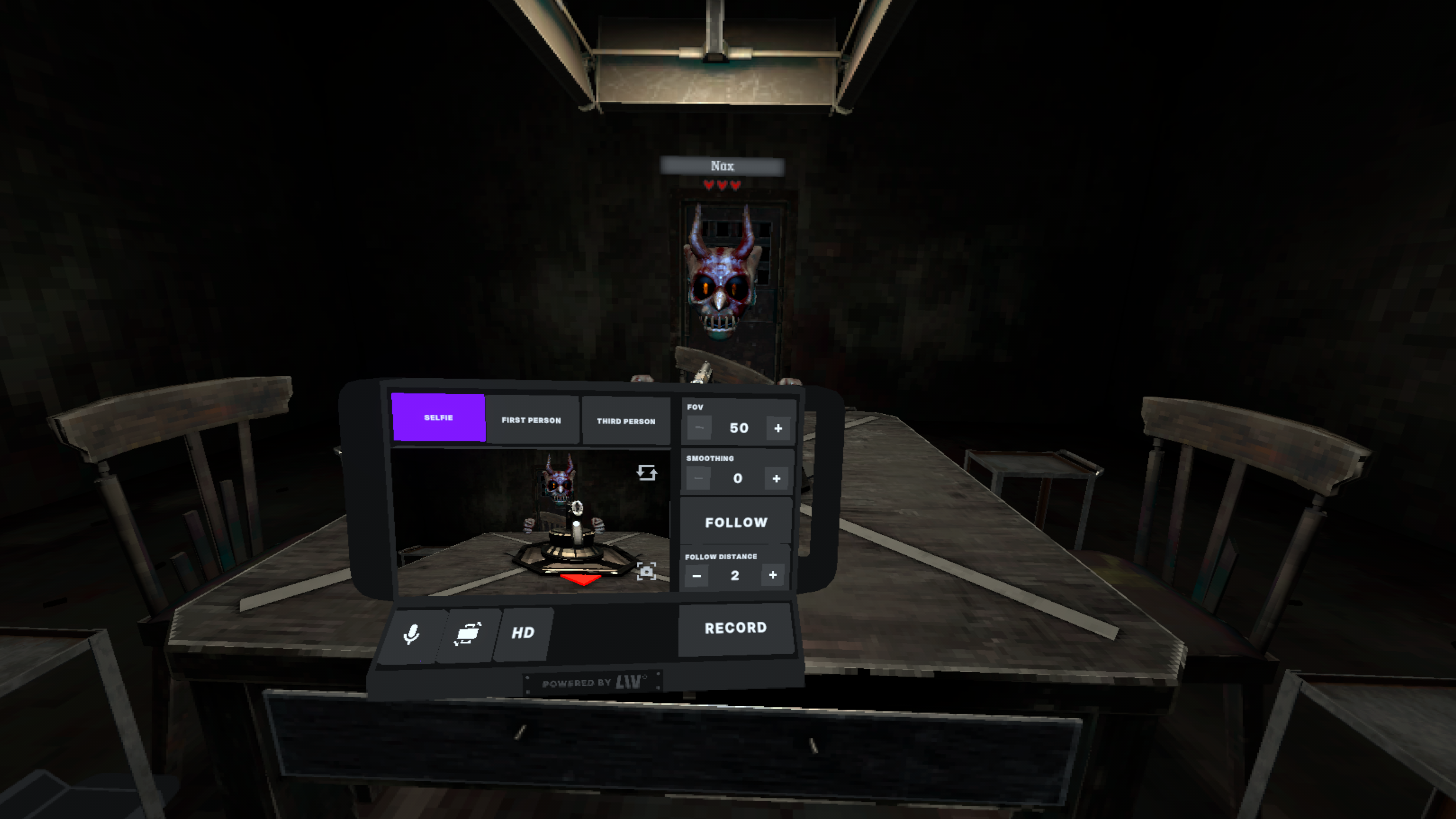
"Most players no longer need to 'learn' how to use these tools," they noted. "If it's available, they will use it. They are already familiar with it!"
This represents a fundamental shift in VR gaming. Content creation tools have become so ubiquitous that players arrive expecting them. The learning curve has disappeared—players already know how selfie cameras, zoom controls, and recording functions work because they've used them in other games.
For Devil's Roulette, this meant immediate adoption. No tutorials needed. No onboarding friction. Just natural content creation from day one.
Smooth Implementation, Quick Timeline
The technical integration process matched the simplicity of player adoption.
"There were no major challenges and implementation was very smooth," the team confirmed. The feature didn't significantly impact their development timeline either—they were able to implement it relatively quickly.
This allowed them to launch with content creation capabilities from the start, rather than adding them post-release when community habits had already formed around alternative recording methods.
What Devil's Roulette Shows
Devil's Roulette's approach demonstrates several principles for successful content integration:
- Learn from other communities - Watch how creators use tools in different games for inspiration
- Design for expression - Content creation is about self-expression, not just recording
- Make UGC strategic - Let content creation drive marketing decisions, not follow them
- Trust player familiarity - Players already know these tools; just make them easily available
- Launch with it - Integrate content creation early rather than adding it later
- Think livestreaming - Consider how live content could amplify your game's social dynamics
The combination of high-stakes psychological gameplay and easy content creation tools creates perfect conditions for organic viral moments.
From Tension to TikTok
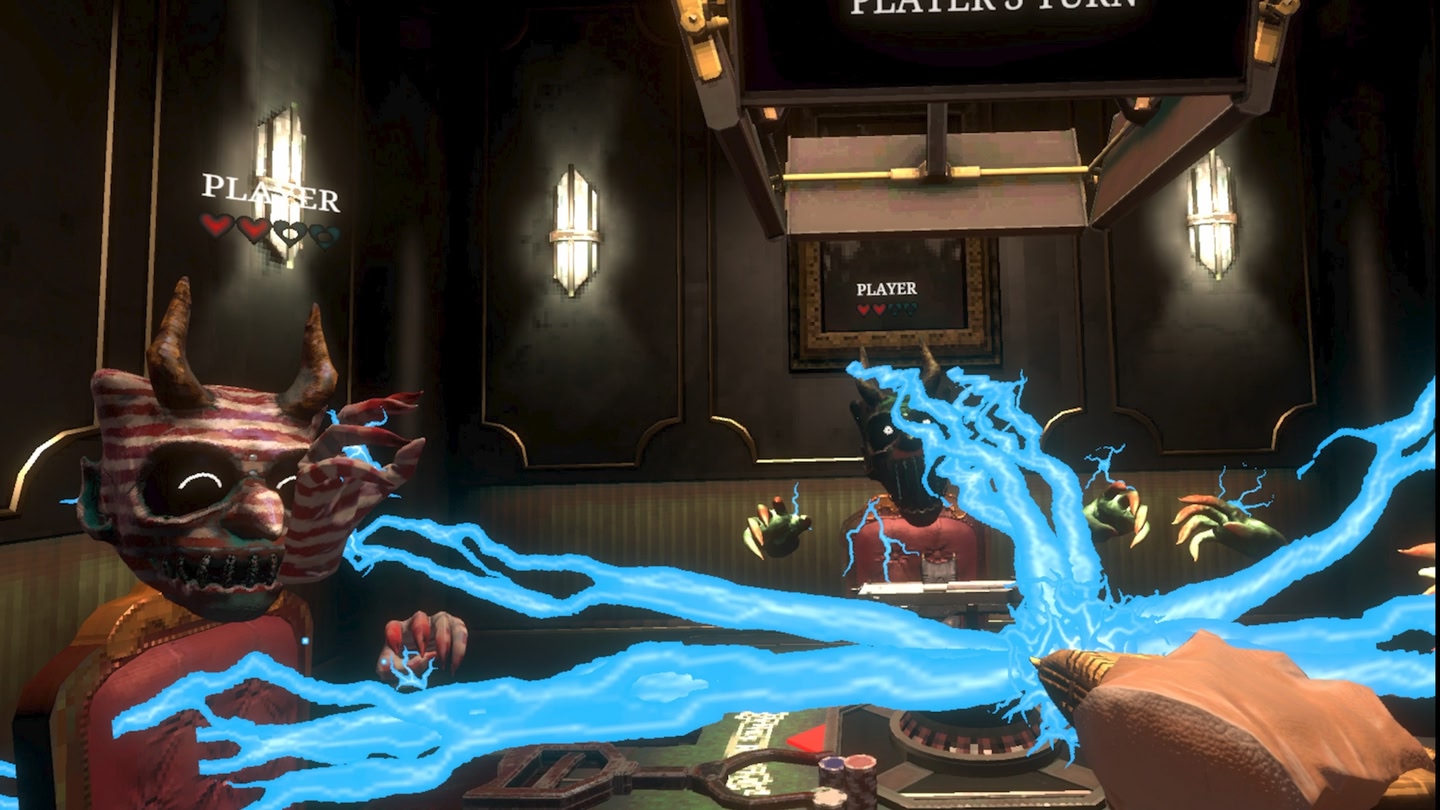
What makes Devil's Roulette's content strategy compelling is how naturally it fits the game's core experience. The same tension that makes the game thrilling to play makes it compelling to watch. The same psychological dynamics that drive multiplayer matches create perfect narrative moments for short-form videos.
By drawing inspiration from how Gorilla Tag creators used selfie angles for self-expression, the Devil's Roulette team created conditions for sustained UGC growth that directly supports their community activity and reach.
Ready to Turn Gameplay Into Content?
Devil's Roulette's success shows that when you combine compelling gameplay with familiar content creation tools, players naturally become advocates.
For Developers: Visit dev.liv.tv to get started with LCK. As Devil's Roulette proved, implementation is smooth and players will use tools they already know.
For Content Creators: Playing Devil's Roulette or other LCK-enabled games? Tag us @PoweredByLIV on social media—we love seeing the dramatic moments you capture!

.jpeg)